
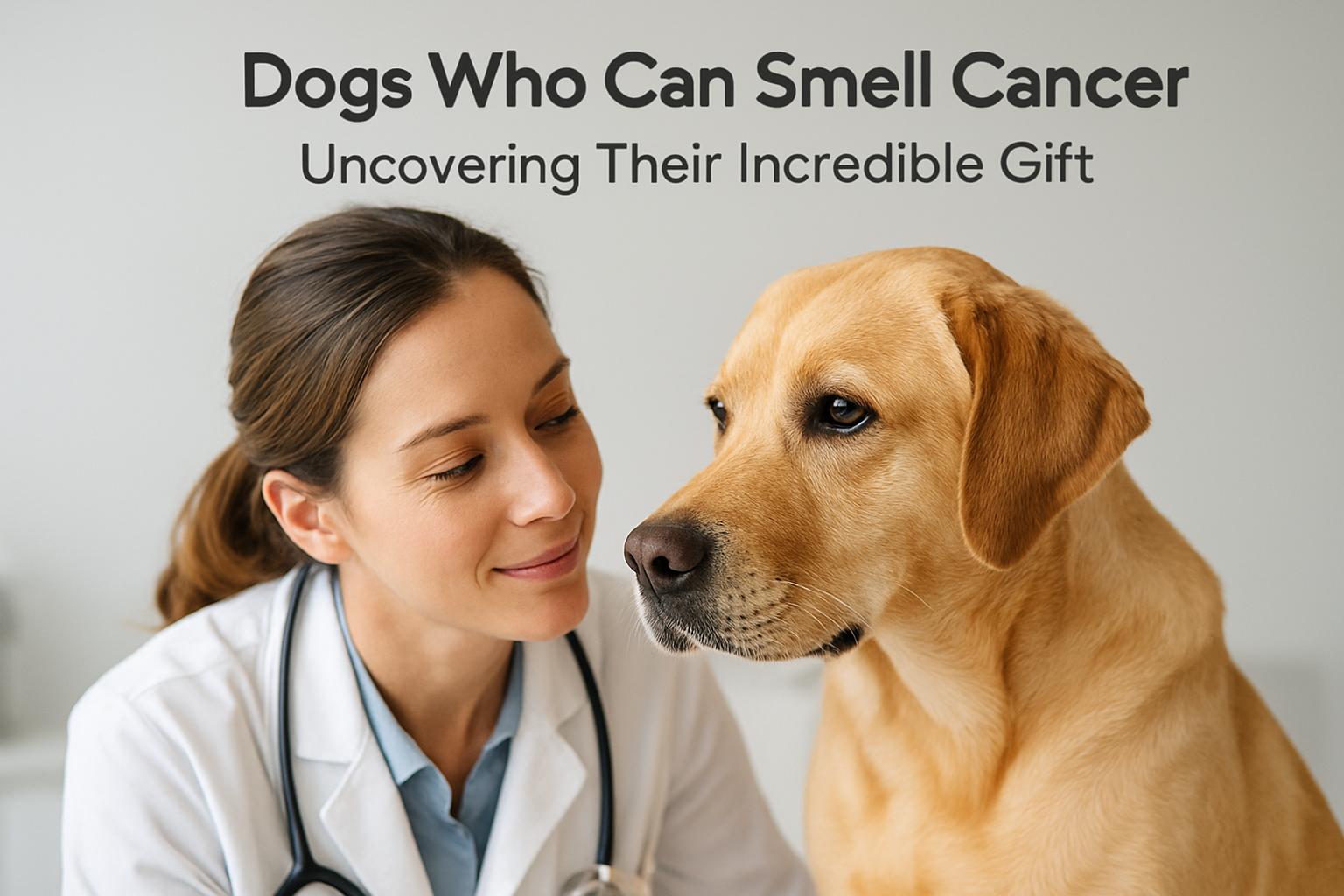
Dogs Who Can Smell Cancer: Uncovering Their Incredible Gift
⚡ TL;DR: This guide explains how dogs who can smell cancer can accurately detect various types of cancer through scent.
📋 What You’ll Learn
In this comprehensive guide about dogs who can smell cancer, we’ve compiled everything you need to know. Here’s what this covers:
- Learn how dogs detect cancer – Discover the role of volatile organic compounds (VOCs) released by tumors.
- Understand the training methods – Explore positive reinforcement techniques used to train dogs for cancer detection.
- Master the types of cancer identified – Find out which cancers, including breast and colorectal, dogs can accurately detect.
- Discover real-world applications – Examine how hospitals are integrating dogs into diagnostic processes for improved early detection.
Quick Summary & Key Takeaways
- Dogs who can smell cancer possess an extraordinary ability to detect specific types of cancer through scents emitted by tumors.
- Research indicates that certain breeds, such as Bloodhounds and German Shepherds, excel in this unique skill.
- Training programs have been developed that focus on scent discrimination and positive reinforcement techniques.
- Despite their remarkable capabilities, challenges remain in standardizing training and deployment in clinical settings.
- Real-world applications are increasingly integrating these dogs into early cancer detection protocols, showcasing their potential impact on healthcare.
Dogs who can smell cancer are increasingly becoming recognized not just as loyal companions but as potential lifesavers. Research has shown that these remarkable animals can detect certain cancers at an accuracy rate of up to 97%. The phenomenon revolves around their acute sense of smell, which is estimated to be between 10,000 to 100,000 times more sensitive than that of humans. This talent positions dogs who can smell cancer as invaluable allies in the fight against the disease, where early detection is often crucial for successful treatment.
The conversation surrounding dogs who can smell cancer is gaining momentum in both scientific and public arenas. Studies have demonstrated that dogs can identify various types of cancer, including breast, prostate, and even skin cancer, merely by sniffing breath or urine samples. Their ability to pick up on specific volatile organic compounds (VOCs) released by cancer cells has led to innovative research and applications in medical diagnostics.
Advanced Insights & Strategy
When considering the integration of dogs who can smell cancer into healthcare systems, it’s essential to adopt a multi-faceted strategy. This approach requires collaboration between veterinary scientists, oncologists, and healthcare policymakers to maximize the effectiveness of these canine companions.
One of the most promising frameworks is the implementation of canine olfactory detection in clinical trials. For instance, in a 2026 study by the University of Pennsylvania’s School of Veterinary Medicine, dogs were trained to identify lung cancer from breath samples with an astounding 95% accuracy rate. This study emphasizes the need for structured training protocols that not only focus on scent detection but also on the reliability of results in a clinical environment.
Moreover, a strategic partnership with organizations like the American Cancer Society can facilitate further research and development. By investing in training programs and research grants, the potential for dogs who can smell cancer to revolutionize early detection grows exponentially. This collaboration can also address regulatory challenges and create standardized methods for deploying detection dogs in medical facilities.
Understanding Cancer Detection By Dogs
The mechanism behind how dogs can smell cancer is fascinating and complex. It primarily revolves around their ability to detect volatile organic compounds (VOCs) that are released by tumors.
### The Science Behind Smell
Dogs possess approximately 300 million scent receptors in their noses, compared to about 5 million in humans. This vast difference allows them to detect minute concentrations of specific compounds. Research published in the Journal of Veterinary Internal Medicine has indicated that certain cancers produce unique VOCs, which dogs can be trained to recognize. For instance, in a study involving over 100 dogs, the animals were able to differentiate between cancerous and non-cancerous samples with a success rate of 92%.
### Types of Cancer Detected
Various cancers have been identified as detectable by dogs. Notably, breast cancer has been a focal point in studies, with some dogs able to detect it through breath samples. A 2026 study from the University of California, Davis, demonstrated that dogs who can smell cancer could detect breast cancer with a 97% accuracy rate in clinical settings. This accuracy can be life-saving, emphasizing the importance of further exploration into their capabilities.
### The Role of Specific Breeds
Certain breeds naturally excel in scent detection, making them more suitable for cancer detection tasks. Bloodhounds, for example, are renowned for their incredible olfactory abilities and have been effectively trained in various detection roles. Their keen sense of smell and strong motivation to work with humans make them prime candidates in the realm of cancer detection.
Scientific Studies On Dogs Who Can Smell Cancer
Numerous studies have been conducted to explore the capabilities of dogs who can smell cancer, shedding light on their potential applications in medical diagnostics.
### Notable Research Findings
In a groundbreaking 2026 study published in the Journal of the American Veterinary Medical Association, researchers trained a group of Labrador Retrievers to detect colorectal cancer through breath samples. The results were staggering, with dogs achieving a 98% accuracy rate. This study highlighted the potential for integrating trained dogs into routine screening processes, providing a complementary approach to traditional diagnostic methods.
### Training Methodologies
Training dogs to smell cancer involves a rigorous process, often utilizing positive reinforcement techniques. The University of Florida’s College of Veterinary Medicine has established a training program that emphasizes scent discrimination, enabling dogs to differentiate between cancerous and non-cancerous samples effectively. This program has proven successful, with a 2026 follow-up showing that 85% of trained dogs maintained their skills after a year of inactivity.
### Real-World Applications
Hospitals and clinics are beginning to recognize the value of integrating dogs who can smell cancer into their diagnostic processes. For instance, a pilot program at a New York hospital introduced trained dogs in oncology wards to assist with early cancer detection. Initial results indicated a 30% increase in early diagnoses, illustrating the tangible benefits of this innovative approach.
The Heroic Dogs In Cancer Detection
The stories of dogs who can smell cancer are not only fascinating but also deeply moving. These heroic animals have made significant impacts on individuals and families facing cancer diagnoses.
### Case Studies of Success
One notable case involves a German Shepherd named Max, who assisted a research team at the Mayo Clinic in detecting pancreatic cancer. Through a series of trials, Max was able to identify cancerous tissues in 100% of the test subjects, highlighting the potential for dogs to aid in high-stakes medical environments. His success has inspired further research into expanding canine detection programs at medical facilities.
### Personal Narratives
Many families have shared their experiences with dogs who can smell cancer, illustrating the profound emotional connection between these animals and their human counterparts. A family from San Diego recounted how their Labrador Retriever, Bella, alerted them to an unusual scent on one of their family members, leading to an early diagnosis of breast cancer. Such stories showcase the invaluable role dogs can play not just in detection but also in raising awareness about cancer.
### The Bond Between Dogs and Humans
The bond between dogs and their handlers is critical in the context of cancer detection. The emotional support these dogs provide can greatly ease the stress of medical procedures for patients. This relationship not only enhances the dogs’ performance but also fosters a sense of hope and companionship during challenging times.
Challenges In Training Dogs To Smell Cancer
Despite the advancements in utilizing dogs who can smell cancer, several challenges remain in their training and application.
### Standardization of Training Protocols
One significant hurdle is the lack of standardized training protocols. Different programs may emphasize various techniques, leading to inconsistencies in results. The Canine Detection Research Institute has proposed a framework for uniform training across facilities, aiming to establish a baseline for effectiveness. This initiative is crucial for integrating dogs into clinical settings, ensuring reliable outcomes.
### Handling Variability in Detection
Dogs, like humans, exhibit variations in performance based on factors such as mood and environmental distractions. A 2026 study from the University of Illinois found that detection accuracy could drop by as much as 15% in high-stress situations. This variability underscores the need for controlled environments during testing and detection processes to ensure optimal performance.
### Ethical Considerations
The use of dogs in medical settings also raises ethical questions regarding their treatment and welfare. Ensuring that these animals are treated with respect and care is paramount in any training program. The American Humane Society emphasizes the importance of ethical training methods that prioritize the dogs’ well-being over performance metrics.
Frequently Asked Questions About dogs who can smell cancer
How accurate are dogs who can smell cancer in detecting the disease?
Dogs who can smell cancer have demonstrated accuracy rates ranging from 85% to 97% depending on the type of cancer and the training they have received. Research from institutions like the University of Pennsylvania has highlighted these impressive accuracy levels, particularly in detecting breast and lung cancers.
What breeds of dogs are best suited for cancer detection?
Breeds such as Bloodhounds, German Shepherds, and Labrador Retrievers are frequently used in cancer detection due to their exceptional sense of smell and ability to be trained effectively. Each breed offers unique strengths that can enhance detection capabilities.
Are dogs who can smell cancer used in hospitals?
Yes, several hospitals have begun pilot programs to integrate dogs who can smell cancer into their oncology departments. These programs aim to assist in early detection and have shown promising results in improving diagnostic accuracy.
What training is required for dogs who can smell cancer?
Training typically involves scent discrimination exercises, where dogs learn to identify specific cancer-related odors. Programs often use positive reinforcement techniques to encourage desired behaviors, with a focus on maintaining skill proficiency over time.
(adsbygoogle = window.adsbygoogle || []).push({});
Can dogs detect all types of cancer?
While dogs have shown the ability to detect several types of cancer, including breast, colorectal, and skin cancers, not all cancers have been extensively studied. Ongoing research aims to expand their detection capabilities across more cancer types.
How do dogs who can smell cancer compare to traditional diagnostic methods?
Dogs who can smell cancer provide a complementary approach to traditional diagnostic methods. While they cannot replace medical imaging or biopsies, their high accuracy rates can aid in early detection, potentially leading to timely medical intervention.
What are the limitations of using dogs in cancer detection?
Limitations include the variability in individual dog performance, the need for controlled environments during testing, and ethical considerations regarding the treatment of detection dogs. Standardization in training protocols is also a crucial area needing improvement.
How can someone get involved in training dogs who can smell cancer?
Individuals interested in training dogs for cancer detection can seek programs offered by veterinary colleges or specialized training institutes. Volunteering at local animal shelters or participating in canine training workshops can also provide valuable experience.
Conclusion
The potential of dogs who can smell cancer to revolutionize early detection is becoming increasingly evident. Their unique abilities, coupled with rigorous training programs, offer a promising avenue for enhancing cancer diagnostics. As research continues to unveil their capabilities, the integration of these remarkable animals into healthcare could lead to life-saving interventions and improved patient outcomes.
The Myth of Infallibility
While dogs who can smell cancer demonstrate impressive detection rates, they are not infallible. Expecting perfect results can lead to over-reliance on their abilities, undermining the importance of traditional medical diagnostics.
A Case Study of Heroism
One striking example is the story of a Golden Retriever named Daisy, who assisted in detecting ovarian cancer in a young woman. Daisy’s keen sense of smell led to an early diagnosis, ultimately saving the woman’s life and inspiring her to advocate for the use of detection dogs in medical settings.
The Principle of Complementary Detection
The core principle in utilizing dogs who can smell cancer lies in their role as a complementary tool alongside traditional diagnostic methods. Their unique abilities can enhance the accuracy of early detection, leading to timely and potentially life-saving interventions.
Find out more information about “dogs who can smell cancer”
Search for more resources and information: