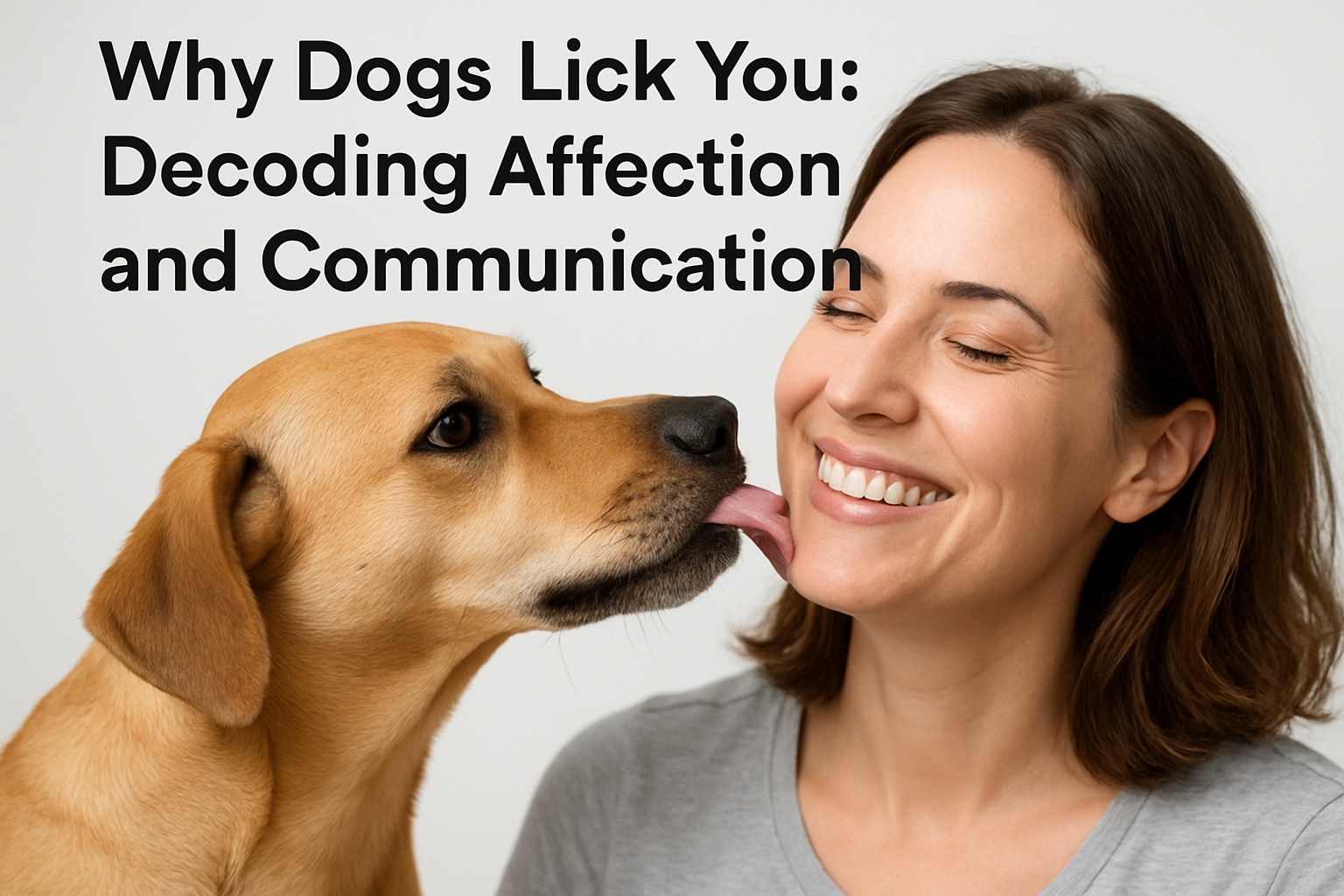
Why Dogs Lick You: Decoding Affection and Communication
⚡ TL;DR: This guide explains the various reasons why dogs lick you, from affection to anxiety communication.
📋 What You’ll Learn
In this comprehensive guide about why dogs lick you, we’ve compiled everything you need to know. Here’s what this covers:
- Understand the instinctual nature – Recognizing that licking stems from inherited behaviors from their wolf ancestors.
- Discover the emotional significance – Learning how licking can express affection, submission, or even anxiety in dogs.
- Master behavioral contexts – Identifying the situations in which licking occurs to better interpret your dog’s feelings.
- Learn about breed-specific traits – Noting how different dog breeds may exhibit unique licking behaviors based on temperament.
Quick Summary & Key Takeaways
- The behavior of licking is deeply rooted in a dog’s instinctual and social nature.
- Understanding why dogs lick you can enhance the bond between pets and their owners.
- Specific breeds may exhibit licking behaviors differently based on their temperament and training.
- Emotional communication through licking can signal affection, submission, or even anxiety.
- Recognizing the context of licking is crucial for interpreting your dog’s feelings accurately.
The question of why dogs lick you is more than just a quirk of canine behavior; it reveals a complex tapestry of communication and instinct. Most dog owners have experienced the wet, affectionate kisses that often come after a long day. But why do dogs lick you? This seemingly simple action is packed with meaning, from expressing affection to signaling submission or even communicating anxiety. Understanding the nuances behind this behavior can deepen the bond between you and your canine companion.
Research indicates that approximately 70% of dog owners report their pets licking them regularly. So, why dogs lick you? The answer lies in a mix of evolutionary history and social interaction. Dogs are descendants of wolves, whose licking behavior is essential for pack dynamics and nurturing. This inherited trait has evolved into a multifaceted form of communication, making it crucial for dog owners to decode the reasons behind their dogs’ licking habits.
Advanced Insights & Strategy
Understanding the behavior of licking requires more than surface-level analysis. It involves integrating knowledge from veterinary science, psychology, and dog training.
To establish a comprehensive framework for interpreting licking behavior, consider three strategic angles:
1. **Behavioral Analysis**: Observing licking in context is essential. A dog that licks you after a stressful encounter may be seeking reassurance, while one that licks when excited is likely expressing happiness. Techniques from behavioral science, such as functional analysis, can help pinpoint these triggers.
2. **Canine Communication**: Dogs communicate through a range of behaviors, and licking is just one. Pairing licking with other signals—like tail wagging or body posture—can provide deeper insights. For example, a wagging tail coupled with licking typically indicates joy, while a lowered head with licking may indicate submission.
3. **Breed-Specific Traits**: Different breeds exhibit varying licking behaviors. For example, Golden Retrievers, known for their friendly disposition, may lick as a primary form of affection, while more independent breeds like the Basenji may lick less frequently. Understanding breed tendencies can inform training and socialization practices.
Understanding Dog Licking Behavior
Dog licking is an intricate behavior that stems from instinctual and learned responses. To truly appreciate why dogs lick you, it’s essential to dissect the underlying motivations and contexts.
Instinctual Behaviors
Dogs lick as part of their instinctual behaviors, a trait inherited from their wolf ancestors. In the wild, wolves lick to show submission, solicit food, or comfort each other. The act of licking releases endorphins in dogs, promoting feelings of comfort and security. This instinct persists in domestic dogs, who may lick their owners to signal trust or affection.
Licking also serves a grooming function. Dogs lick their bodies to clean themselves, which is why they may transition to licking their owners. This behavior can be a sign of affection, as dogs often view their human companions as part of their pack.
Learned Behaviors
While some licking is instinctive, dogs also learn behaviors through socialization. Positive reinforcement plays a significant role. When a dog licks its owner and receives affection in return, it reinforces that behavior. This cycle encourages the dog to lick more often, associating it with positive social interactions.
Training methods can influence licking behavior. For instance, dogs trained to respond to commands might lick as a means of seeking approval or initiating play. Understanding these learned behaviors can aid in shaping how dogs communicate with their owners.
Contextual Influences
The context in which licking occurs can drastically change its meaning. For example, a dog may lick when meeting new people as a greeting or a way to gather information about their scent. Conversely, excessive licking may indicate stress or anxiety, as seen in dogs that lick their owners when they are left alone.
Recognizing the signs of anxiety is crucial. According to the American Kennel Club, dogs that lick obsessively may be experiencing stress, and addressing the underlying cause can improve their overall well-being.
The Science Behind Licking
Licking is not just a random behavior; it is rooted in physiological and psychological processes.
Physiological Responses
When dogs lick, they activate sensory receptors in their mouths that release pleasure-inducing chemicals. This behavior can be associated with their evolutionary survival instincts. For instance, licking an injury or wound can have healing properties, as saliva contains enzymes that promote healing.
Studies conducted by the Journal of Veterinary Behavior suggest that licking can also help regulate anxiety levels in dogs. The act of licking stimulates the release of oxytocin—the so-called “love hormone.” This hormonal response creates a sense of calm, benefitting both the dog and its owner.
Psychological Implications
The psychological implications of licking are profound. Dogs often lick to express affection, and this behavior can strengthen the bond between pet and owner. According to a study by the University of California, dogs that frequently lick their owners tend to have stronger attachment styles, mirroring the deep bond typically formed between human caregivers and children.
Conversely, licking can also indicate distress. For example, a study published in the Journal of Animal Psychology found that dogs left alone for extended periods often resorted to licking as a coping mechanism. Understanding this nuanced behavior is pivotal for addressing anxiety and ensuring a dog’s emotional health.
Evolutionary Perspective
From an evolutionary standpoint, licking serves multiple purposes. It is a remnant of early survival tactics where social bonds were crucial for the group’s survival. Licking aids in communication among pack members and reinforces social hierarchies.
Behavioral ecologist John Bradshaw notes, “Licking is a complex behavior that serves various functions, from social bonding to soliciting care.” His research highlights the adaptability of licking behavior in relation to its environment, suggesting that dogs have evolved to use licking as a versatile communication tool.
Emotional Significance of Licking
The emotional significance of licking is a vital aspect of understanding why dogs lick you.
Affection and Bonding
One of the most common reasons dogs lick their owners is to express affection. This behavior not only strengthens the bond between dog and owner but also serves as a method of social grooming. Dogs often lick to show love and appreciation, interpreting their owner’s responses as affirmations of their feelings.
A study by the American Psychological Association indicates that dogs who frequently lick their owners demonstrate increased levels of attachment. The emotional connection formed through licking can lead to improved mental health for both the dog and the owner, as physical touch is known to reduce stress levels.
Communication of Needs
Dogs also lick to communicate specific needs. For instance, a dog may lick its owner when it is hungry or in need of attention. This behavior can be particularly evident in breeds that are more attuned to human emotions and responses.
Recognizing these signals is essential for effective communication. For example, if a dog licks its owner persistently while looking at their food bowl, it may be a clear indication that it’s time for a meal.
Stress and Anxiety Indicators
While licking can signify affection, it can also indicate stress or anxiety. According to veterinary behaviorists, excessive licking may be a sign of emotional distress. Dogs left alone for long periods or those exposed to significant changes in their environment may resort to licking as a coping mechanism.
The American Society for the Prevention of Cruelty to Animals (ASPCA) recommends observing your dog’s licking behavior in different contexts to distinguish between affectionate licking and anxiety-driven licking. Understanding these nuances can lead to more effective interventions or behavioral adjustments to improve your dog’s emotional well-being.
Why Dogs Lick You and What It Means
Deciphering the meaning behind licking behavior involves looking at various factors, including the dog’s personality, environment, and emotional state.
Affectionate Licking
When dogs lick you out of affection, it often feels warm and endearing. It’s their way of saying “I love you” or “I trust you.” Licking releases oxytocin, creating a bond that enhances mutual affection.
Understanding that this behavior is rooted in their instinctual need for social bonding helps owners appreciate the deeper emotional connection. Many dog owners find comfort in this display of love, often reciprocating with affection, which reinforces the behavior.
Submissive Licking
Dogs may also lick as a sign of submission. This is particularly common in younger dogs or those that are still learning their place in the hierarchy. When a dog licks another dog or a person, it may be acknowledging that individual’s dominance.
Recognizing this behavior helps owners understand their dog’s social dynamics. For instance, a submissive lick can indicate a dog’s desire to avoid conflict, showcasing its understanding of social boundaries.
Medical Conditions
In some cases, excessive licking may indicate underlying medical issues. Conditions such as allergies, skin infections, or even gastrointestinal problems can lead dogs to lick more than usual. If a dog is licking excessively or in a way that seems compulsive, consulting a veterinarian is advisable.
Understanding why dogs lick you in these contexts can prevent potential health issues from escalating. Regular veterinary check-ups can ensure that any physical causes behind licking behaviors are addressed promptly.
Frequently Asked Questions About why dogs lick you
What does it mean when my dog licks me excessively?
Excessive licking can indicate anxiety, stress, or discomfort. It may also signal a medical issue, such as allergies or skin conditions. Observing the context and frequency of the behavior is essential. If licking persists, consulting a veterinarian is recommended to rule out health problems.
Is licking a sign of affection or submission in dogs?
Licking can signify both affection and submission. Dogs often lick to express love and bond with their owners, while submissive licking indicates respect for a higher social status. Understanding the context of the licking behavior helps clarify its meaning.
Why do puppies lick their owners?
Puppies lick their owners as a form of communication, often expressing affection or seeking attention. This behavior is part of their social learning and helps establish bonds within their human family. It’s a natural instinct inherited from their ancestors.
Can licking be a sign of a health problem?
Yes, excessive licking can indicate health issues, such as allergies, skin irritations, or gastrointestinal problems. If a dog licks excessively or shows signs of distress, it’s crucial to consult a veterinarian for proper diagnosis and treatment.
(adsbygoogle = window.adsbygoogle || []).push({});
What should I do if my dog licks me when I’m upset?
If your dog licks you when you’re upset, it may be trying to comfort you. Dogs are sensitive to human emotions and often respond with affectionate behavior. Acknowledging this behavior and providing reassurance can enhance your bond and help your dog feel secure.
Do certain dog breeds lick more than others?
Yes, some breeds are naturally more prone to licking than others. For example, retrievers and spaniels may lick more frequently as part of their friendly disposition. Understanding breed tendencies can help owners anticipate and interpret licking behaviors more effectively.
Why do dogs lick their owners’ faces?
Dogs lick their owners’ faces as a sign of affection and bonding. This behavior can also be a way for dogs to gather information about their humans through scent. It reflects their social nature and desire to connect with their family.
How can I manage my dog’s excessive licking?
Managing excessive licking involves identifying triggers and addressing underlying issues. Providing more exercise, mental stimulation, and enriched social interactions can help reduce anxiety. If licking persists, consulting a veterinarian or a professional dog trainer is advisable.
Conclusion
Understanding why dogs lick you provides valuable insights into their emotional world. This behavior is a multifaceted form of communication that can express affection, submission, or even stress. By recognizing the context and motivations behind licking, dog owners can deepen their bond with their pets and respond more effectively to their needs. Ultimately, the question of why dogs lick you reveals a rich tapestry of canine behavior that is both instinctual and learned, underscoring the importance of communication in the human-animal relationship.
The Misconception About Licking as Just Affection
Many believe that licking is solely an expression of affection. In reality, it’s a complex behavior that can indicate a range of emotions, from love to anxiety. Understanding this complexity is key to effective communication with dogs.
A Real-World Example of Canine Communication
Consider the case of Bella, a Labrador Retriever who licked her owner excessively after they moved to a new home. This behavior was later identified as anxiety due to the change in environment. By implementing a structured routine and providing comfort items, Bella’s licking behavior decreased significantly.
The Core Principle of Understanding Dog Behavior
To truly understand canine behavior, owners must consider the context of actions. Licking is not merely an act of affection; it’s deeply rooted in instinctual behaviors and emotional communication. Recognizing these layers enhances the human-dog relationship.
Find out more information about “why dogs lick you”
Search for more resources and information: